Roads around the KhoeSan
In 2002 I gave a presentation in which I mapped out where my initial research sites lay and superimposed them with
those of an ethnographer, Lebzelter, working in the early 20th century. The routes and even the sites were identical
because of where the roads lay - and that makes a striking imprint on a map of a country the size of Namibia. It is not
that people did not live off the roads but hearing about them and working with them takes special effort, awareness
and time.
This got me thinking about how accounts of "Others" might be essentialized on the basis of physical, conceptual,
political, opportunistic or fiscal factors in the production of fieldwork. Whilst I was thinking about this three
programmes involving the Ju/'hoansi appeared on the television, one presented by Ian Wright, the footballer, another
by Ray Mears and a further terrible programme "Fat Men Can't Hunt" . All three programmes went to the same small
area and drew on a group of Ju/'hoansi who were linked to the local tourist operatives. The same key hunters that
tourists would be introduced to in Tsumkwe lay behind these programmes. This seemed good evidence of how the
opinions of a few, these Ju/'hoansi, were becoming representative of Ju/'hoan generally. This seemed a blatant
example of a phenomenon that happens in more subtle ways in wider fields of anthropology and development.
Certainly amongst ╪Khomani it is the same people who represent ╪Khomani and mostly reap the benefits of film
contracts or other NGO led initiatives. In my presentation in 2002 I framed this phenomenon as " The Research
Funnel"
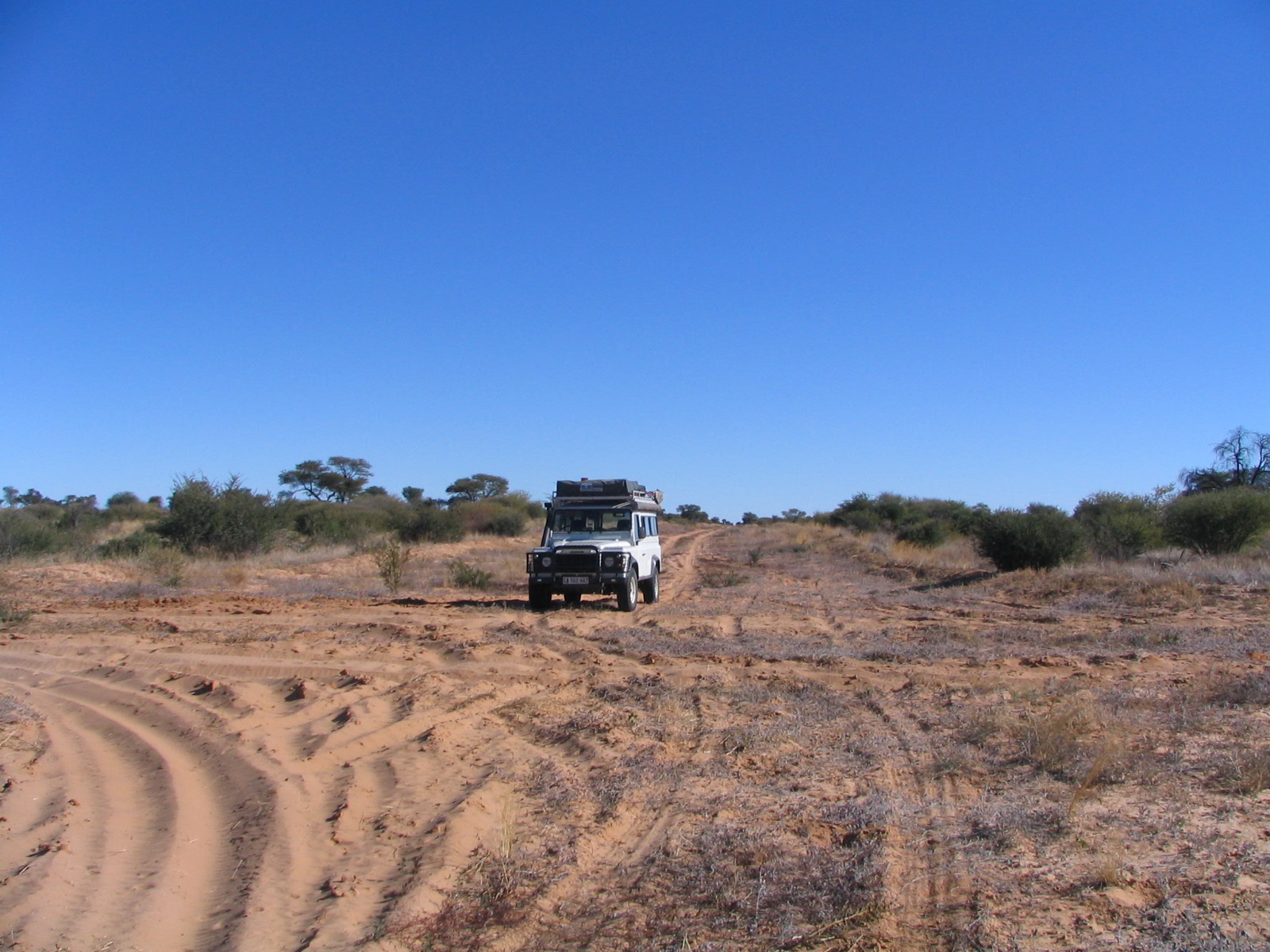
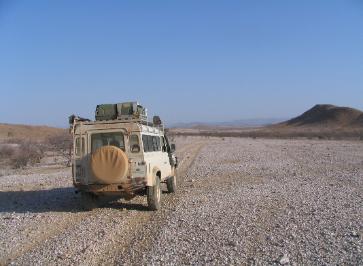
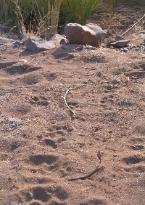
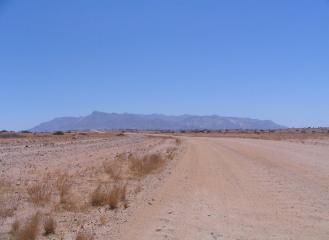
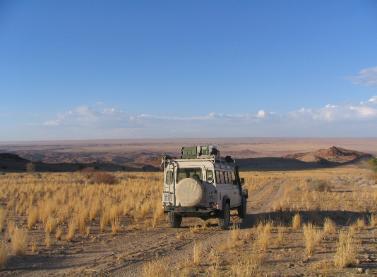
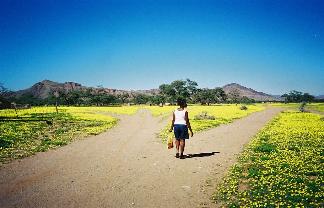
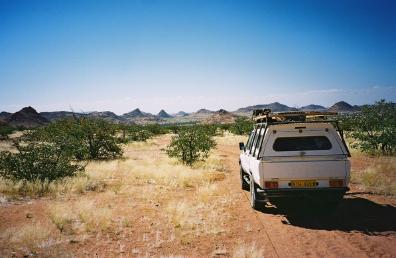
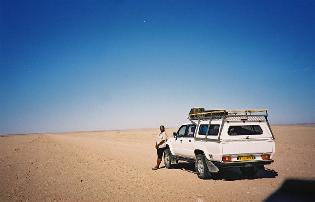
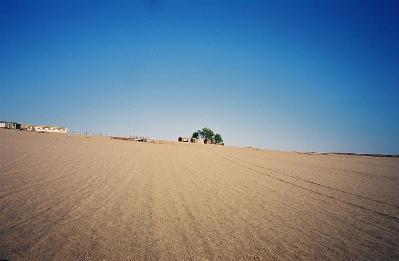
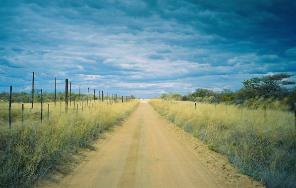
I feature roads here as both actual and symbolic roots of access. The lion tracks speak of a quieter indigenous
presence that takes time to follow but has real consequnces when you arrive.
those of an ethnographer, Lebzelter, working in the early 20th century. The routes and even the sites were identical
because of where the roads lay - and that makes a striking imprint on a map of a country the size of Namibia. It is not
that people did not live off the roads but hearing about them and working with them takes special effort, awareness
and time.
This got me thinking about how accounts of "Others" might be essentialized on the basis of physical, conceptual,
political, opportunistic or fiscal factors in the production of fieldwork. Whilst I was thinking about this three
programmes involving the Ju/'hoansi appeared on the television, one presented by Ian Wright, the footballer, another
by Ray Mears and a further terrible programme "Fat Men Can't Hunt" . All three programmes went to the same small
area and drew on a group of Ju/'hoansi who were linked to the local tourist operatives. The same key hunters that
tourists would be introduced to in Tsumkwe lay behind these programmes. This seemed good evidence of how the
opinions of a few, these Ju/'hoansi, were becoming representative of Ju/'hoan generally. This seemed a blatant
example of a phenomenon that happens in more subtle ways in wider fields of anthropology and development.
Certainly amongst ╪Khomani it is the same people who represent ╪Khomani and mostly reap the benefits of film
contracts or other NGO led initiatives. In my presentation in 2002 I framed this phenomenon as " The Research
Funnel"
I feature roads here as both actual and symbolic roots of access. The lion tracks speak of a quieter indigenous
presence that takes time to follow but has real consequnces when you arrive.
© 2009 Chris Hewson Low, All Rights Reserved